IoT conference recap at AMIS: digital twins and business results
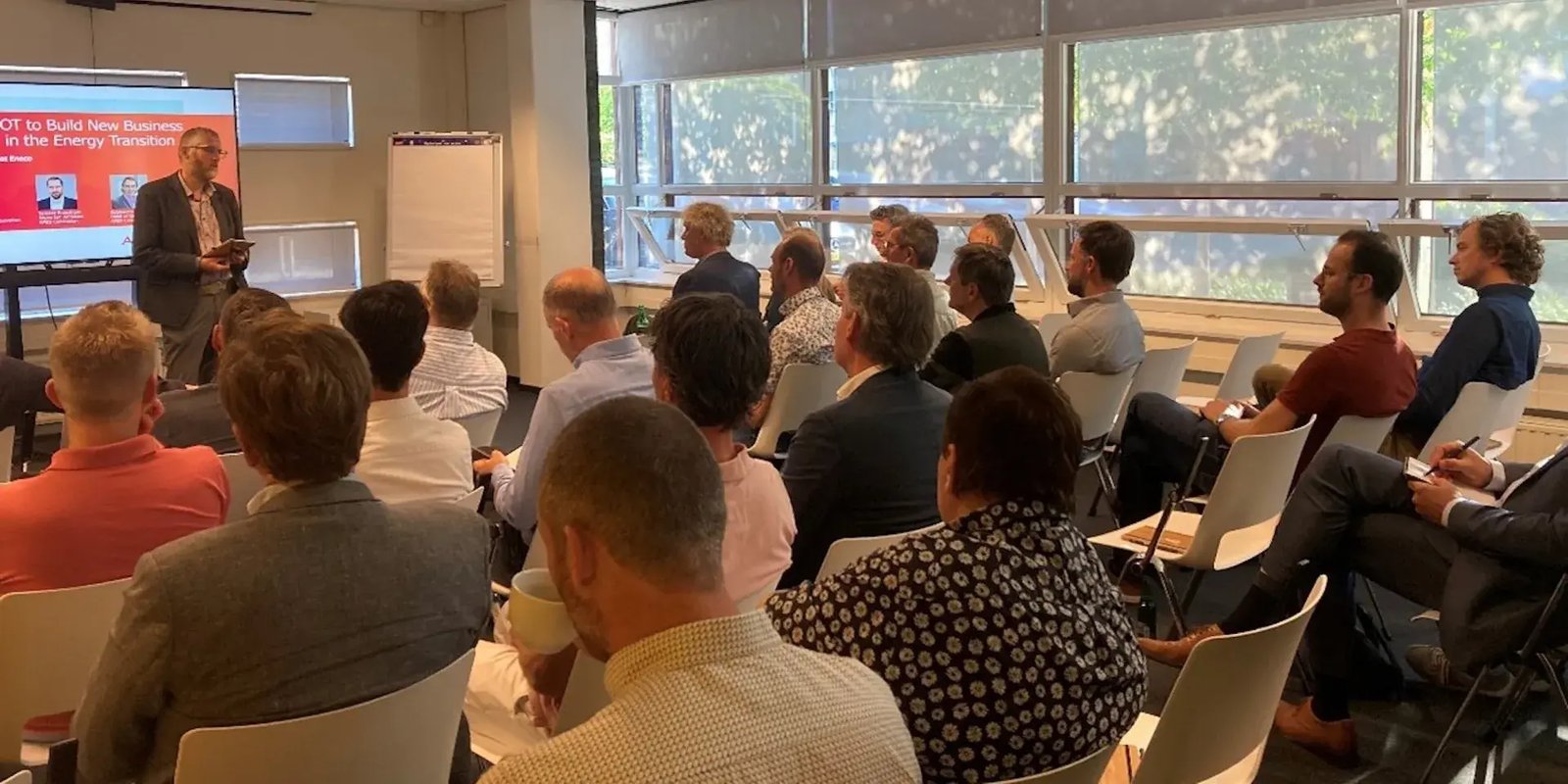
On 14 June 2022, AMIS hosted a recap of IoT Solutions World Congress. Robbrecht van Amerongen and Tomasz Brzezinski from AMIS, together with Edwin Postma (Architect at Eneco), attended the conference in May 2022. During the recap, they shared their perspectives with a full room on technological developments, the latest innovations, notable market trends and best practices for implementing IoT at scale.
Attendees were particularly interested in learning how the IoT market is maturing. Which implementations have been successful, and what factors contribute to their success? Which technologies are leading market players using, and how mature are suppliers in applying these new technologies?
Robbrecht van Amerongen opened the evening with an overview of IoT Solutions World Congress and the key topics shaping the industry. Held annually in Barcelona, the conference is the largest gathering of IoT experts. With 12,000 visitors, 350 companies and 270 speakers, it is the perfect place to connect with IoT experts and discuss current topics.
Connectivity is out, digital twins are the hot topic
One striking observation was that connectivity was barely discussed at the conference. A few years ago, topics such as LoRa, LTE-M and 5G were everywhere. Robbrecht concludes that these technologies still matter, but are now largely integrated into devices as standard. Many devices have a digital module that handles data exchange through its own IP-based connectivity. This year, the focus was much more on business results, which require increasing amounts of data and analytics. There is also a stronger emphasis on integrating IoT data from end to end, deriving insights through analytics and triggering actions in backend systems such as ERP and asset management systems. Attractive dashboards displaying IoT data are giving way to overviews of business outcomes achieved through automated actions based on incoming data.
We see this in large-scale IoT implementations that deliver substantial business results. Examples include Volkswagen (more efficient production processes), BP (better work planning and fewer physical inspections) and London Array (less maintenance and a longer lifespan for a large offshore wind farm). And, of course, the joint Eneco and AMIS case, where reducing CO₂ emissions contributes to a more sustainable energy mix.
Eneco, Energy Cloud: focusing on speed and scale, working iteratively towards an ambitious goal
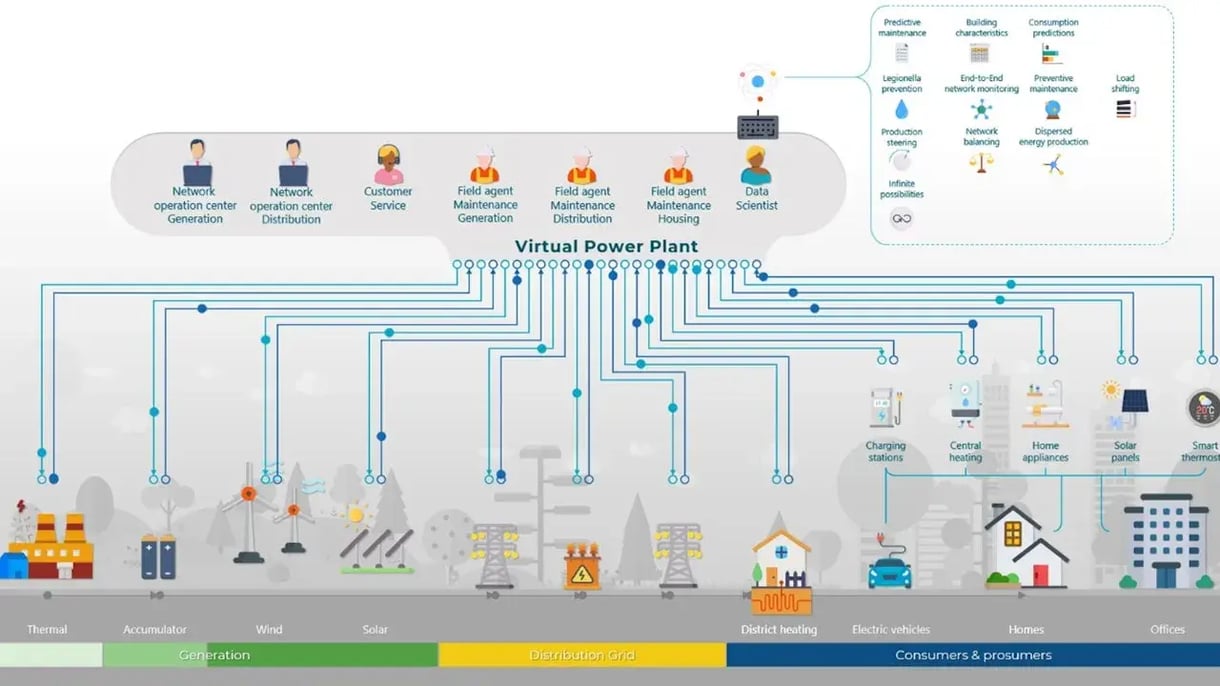
During his presentation, Edwin Postma, Enterprise Architect at Eneco, took us through Eneco’s journey. He explained how Eneco’s strategic objective was translated into concrete actions and decisions, leading to the development of a smart energy grid IoT platform that supports a wide range of business use cases. He calls this the Energy Cloud. Eneco aims to become climate neutral by 2035. This means increasing the share of renewable energy sources and replacing gas boilers with district heating and heat pumps. This transition requires much more balancing and coordination across energy networks. It calls for a smart grid capable of exchanging large volumes of energy supply and demand data at high frequency. Eneco brought this challenge to AMIS. The result is a highly scalable and flexible IoT platform that enables Eneco to implement a wide range of use cases. Its distinguishing feature is the ability to connect data across different energy sources and systems on a single platform: heat, solar, wind, batteries, conventional fossil fuel generation, boilers and EV charging points. In doing so, it breaks down traditional silos in the energy industry.
Smart energy grid becomes Energy Cloud
Finally, Tomasz Brzezinski demonstrated how the Eneco project evolved: from connecting individual smart meters to a complete energy grid that brings together data on energy generation, distribution and consumption in a single platform. This platform supports Eneco’s business use cases, including network optimisation, fault detection, anticipating consumption patterns and balancing the grid. Data in the Energy Cloud also enables data scientists to develop new data products that contribute to Eneco’s sustainability and business objectives. Tomasz concluded by exploring the meaning of a digital twin. He observed that many different definitions coexist, although they are gradually converging. We also noted that, in many cases, a digital twin is not needed yet. Generally, only 20–30% of complex data processing cases require a digital twin. The remaining cases can be addressed using ‘ordinary’ discrete logic.
Conclusion of the evening
After the session, we continued talking with participants over refreshments about their experiences, plans and strategies. We focused particularly on what makes an IoT solution successful. The evening’s key takeaways:
Avoid tinkering: work with professionals and build an ecosystem.
Prevent silos and take an integrated approach.
Dare to think big, but start one step at a time.
Focus on business use cases and build on them so they reinforce one another.
Plan for scalability and design your architecture and platform accordingly.
Prioritise collaboration: success requires multiple parties willing to work together.
Resist the temptation of ‘quick fixes’.
IoT solutions, digital twins and similar applications require a tailored approach based on a blueprint of your organisation.