Trends in IoT: Industrie 5.0, energiebesparing en Digital Twin
As in previous years, AMIS Conclusion attended IoT Solutions World Congress to explore the latest trends and developments in IoT and real-time data. With 16,000 participants, the annual congress in Barcelona is Europe’s largest IoT gathering.
This year was particularly special because our customer Eneco gave a presentation about achieving its ambitions through IoT data. Our customer NS Stations also received the Industry Solutions Award 2023 for the best ‘smart buildings and smart cities’ solution, recognising its 3D digital twin of Utrecht Central Station.
IoT Solutions World Congress highlights at AMIS Conclusion
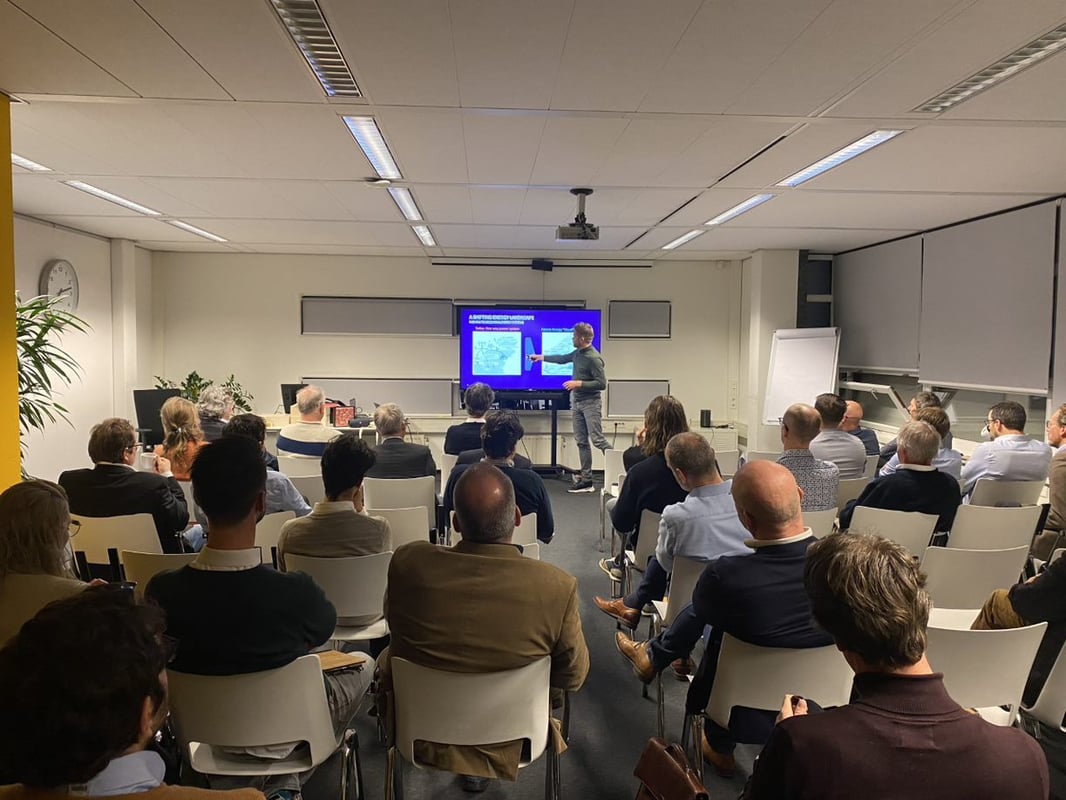
On 7 March, AMIS Conclusion hosted a well-attended recap of the conference, discussing its main trends. This article summarises the highlights. Interested in the full presentation? You will find the download form at the bottom of this page.
Industry 5.0: more intelligence and value creation
One notable development at IoT Solutions World Congress was the concept of Industry 5.0, which still appears to have several definitions. Whereas Industry 4.0 primarily focuses on making machine data accessible at scale, Industry 5.0 goes further by turning data directly into value through automated interpretation. Systems increasingly incorporate logic and intelligence, enabling them to intervene in processes autonomously.
Energy savings: measuring, sizing and configuring electric motors
Another important trend is energy savings, driven primarily by rising energy costs in recent years. This has brought a focus on measuring energy consumption, particularly that of electric motors, selecting correctly sized motors and configuring their drives properly. These measures can readily deliver savings of 15%. Consider that electric motors account for 45% of global electricity consumption.
Digital twins: back to basics
Digital twins were among the most discussed topics at the congress. Every self-respecting IoT company seems to need a digital twin offering. The originator of the concept, Dr Michael Grieves, was one of the keynote speakers. His explanation brought digital twins back to their fundamentals, helping clarify the discussion.
Sustainability: still receiving little attention
Although we expected sustainability to be a major trend this year, it received almost no attention at the conference. For solutions focused on reducing energy costs, sustainability was a welcome additional benefit. Remarkably, other sustainability objectives were not discussed.
A digital twin of Utrecht Central Station
In his presentation, Remco Bunder, Product Expert at NS Stations, explained how NS Stations created a digital twin of Utrecht Central Station. An AMIS Conclusion team supplied the model with real-time data feeds. The model and its data streams give station staff an up-to-date view of what is happening, allowing them to intervene promptly. This improves safety, reduces costs, supports better maintenance and lowers the station’s environmental footprint.
Unlimited use cases for Eneco
Peter Dreschler and Paolo Herde from Eneco then gave an inspiring presentation about Eneco’s journey over the past few years. Through a clear vision and the continuous implementation of new use cases, Eneco’s IoT platform has become the foundation for real-time data processing within the company. A substantial number of components are now available, making it possible to launch new innovations quickly. For example, wind turbines can now be shut down when migratory birds are passing, reducing the ecological impact of wind energy. This is just one of the many possibilities IoT offers Eneco.
Sustainability and screens
Reporting on ISE, the largest trade show for digital products such as audio, video and digital signage, Menno Pleij from ForeyeT shared insights into trends in screens and advertising displays. He identified a trend towards higher resolutions and more screens, which often conflicts with organisations’ sustainability requirements. Menno explained how digital displays work and how our customers can offer future-proof products without being tied to a single supplier.