From isolated alarms to
It’s Monday morning, just before rush hour. An escalator stops at an interchange station. Moments later, the Operations Centre loses its connection to a lift. At the same time, an alert comes in about the doors on a metro train. Which alert needs attention first? And what does the operator need to know to make that call?
In the first instalment, From operational data to intelligent asset operations, we looked at how rising motor load can prompt an escalator inspection. In this second instalment, we turn to the operator’s desk. How can the same asset information help operators assess alerts, set priorities and follow up on specific maintenance needs? And how does that change their day-to-day work?
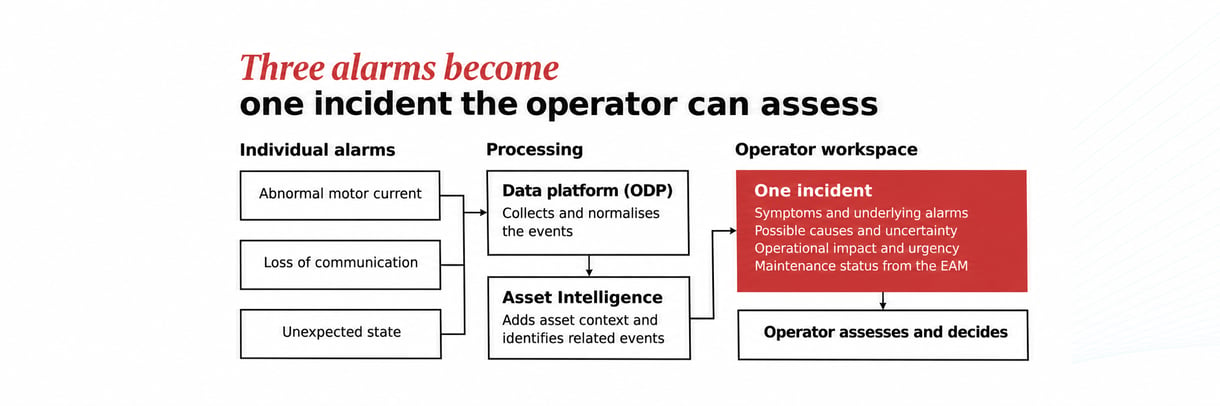
A motor controller detects an unusual current draw. A network component reports a loss of connectivity. The control system records an unexpected shutdown. The operator receives three alerts that may all relate to a single incident. To find out, the operator often has to compare data from different systems.
An operational data platform (ODP) collects the alerts and converts them to a common format. Asset Intelligence adds information about the asset, how it is configured and how it relates to other assets. Using that information and the timing of the alerts, the system can group them into a potential incident. The original alerts remain visible, so the operator can check why they were grouped together even if an alert arrives late or the cause is still unclear.
From three separate alarms to a single incident the operator can assess.
A lift breakdown requires a faster response if it leaves passengers without an accessible route to the platform. If a second lift is available, the operator may assess the same technical alert differently. Location, time of day and the available alternatives all help determine which action takes priority.
Operations, asset management and maintenance teams agree on which factors carry the most weight and when to escalate an incident. The operator’s workspace shows the current situation and applies the agreed prioritisation rules. The operator then decides what action to take. Document which decisions operators can make themselves and when they should call in a maintenance engineer or the fault response team. This makes it clear who is responsible for the maintenance decision.
A detection model can flag unusual behaviour before it reaches a fixed alarm threshold. In the case of the stopped escalator, the analysis may point to increased mechanical resistance. The operator needs to see which measurements the model used, what it treated as normal behaviour and what other explanations are possible. If relevant measurements are missing, the asset is marked as ‘unable to assess’.
Generative AI can look up a maintenance instruction or a similar incident and link to the source. Within agreed limits, an AI agent can prepare a work request or flag that an incident has yet to be followed up. The operator reviews the findings and decides what to do next.
From a single workspace, the operator can see which asset is affected, what the impact is and whether maintenance is already scheduled. If an inspection is needed, the operator can prepare a work request with the relevant readings and alerts. The work order and maintenance records stay in the Enterprise Asset Management (EAM) system. The operator can track progress from the same workspace without re-entering data.
When closing the work order, the technician records what they found and which action resolved the issue. For example, suspected bearing damage may turn out to be a lubrication problem. Maintenance specialists can use that feedback to assess whether the condition monitoring rule needs adjusting and what information they’ll need the next time an alert comes in.
Operators who are used to receiving and forwarding alarms take a more active role in assessing them. A practical understanding is enough. They need to know what a condition monitoring rule or model does, which data it uses and when a recommendation warrants further investigation. This requires a direct line of communication with the maintenance engineer. Operators flag information that is missing or inaccurate in practice, and the engineer adjusts the condition monitoring rules. Regular reviews of false alarms and faults that went undetected keep the rules and working practices up to date.
Choose a group of assets with recurring faults, such as lifts at interchange stations. Work with operators and technicians to identify what information they need to assess an alert, who decides what action to take and what inspection findings should go into the work order.
Before rollout, measure how long it currently takes to assess an incident, how many duplicate alerts come in and how often maintenance actions are followed up on time. Agree on targets and compare the results after rollout. Track false alerts too. Earlier detection is most useful when operators can assess the additional alerts in time.
AMIS Conclusion helps transport organisations link real-time alerts from equipment with station information and maintenance status. From a single workspace, operators can see which alerts may be related, how passengers are affected and what maintenance work is already underway.
We’re happy to help you identify which data to bring together and which incident to start with.

Management Consultant