
From output to sustainable IT solutions: the quadrant model explained
At AMIS Conclusion, we believe that creating value goes beyond simply delivering output. Many organisations focus on adding new functionality without paying enough attention to maintenance and continuity. Our quadrant model addresses this through a structured approach that supports sustainable IT solutions. It enables new developments while ensuring that systems keep running, remain up to date and are maintained with the future in mind.
My role is to ensure that our expertise in building and maintaining data integration platforms and IoT solutions is used effectively and sustainably. Our DevOps teams develop software while also keeping systems running, maintaining them and enabling them to respond quickly to changes.
Our colleagues are our greatest asset. Without them, we would not play a meaningful role in business processes that are critical to society. Developers, architects, business and information analysts, Scrum Masters and delivery managers all contribute to the value that helps our customers achieve their organisational objectives.
Transparency, predictability and reliability
For our customers, jointly determining what is truly needed is essential. Transparency, predictability and reliability give these conversations substance. Customers want visibility and control over project progress and priorities. This helps them stay focused and create value for their business.
In my experience, pressure from the business often makes it difficult to balance new functionality with keeping existing systems working properly. Open conversations with customers allow us to make joint decisions about prioritising new features without neglecting maintenance, which remains on the backlog. Our Agile/Scrum approach makes progress visible and gives customers a clear understanding of the results they can expect.
The importance of sustainable software maintenance
Building new functionality, integrating data and connecting systems often take priority, but maintaining existing solutions is just as important. Minimising technical debt is crucial to ensuring long-term software performance. I often explain this through a simple comparison: just as you maintain your car by regularly topping up fluids, changing tyres and carrying out minor repairs, IT systems need continuous management and maintenance to keep performing at their best.
Keeping software solutions viable over the long term requires what we call lifecycle management. This also ensures they can meet future business needs. We measure output through both delivered functionality and indicators such as recovery time and system stability.
Creating value through managed services
People, knowledge and technology need to be deployed carefully. This requires a deliberate allocation of attention and clear priorities. At AMIS Conclusion, we developed the quadrant model for this purpose. It provides insight into our DevOps teams’ capacity and output, helping customers gain maximum value from our collaboration.
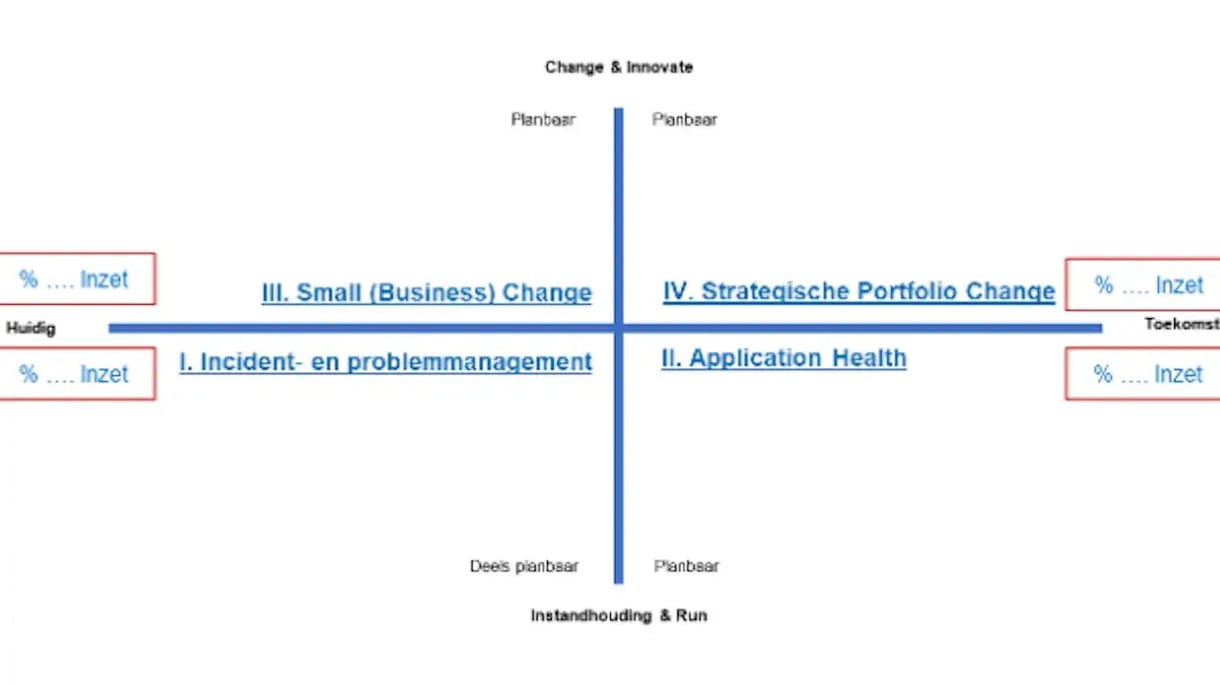
Our quadrant model is an ideal tool for jointly deciding where the DevOps team should focus its efforts. Each quadrant receives a percentage of the team’s capacity, adding up to 100%. Together, we agree on an allocation based on the roadmap, including expected developments and maintenance. We review this allocation regularly and adjust it when necessary.
At AMIS Conclusion, partnership revolves around value and quality. Our quadrant model provides a structured approach to planning our teams’ work, covering everything from incident and problem management to continuous monitoring, capacity management and strategic portfolio management. This delivers a reliable, predictable IT environment aligned with our customers’ changing needs.
We understand that IT needs continually evolve. Our contracts are therefore flexible and adaptable to customers’ changing requirements. Regular strategic discussions and updates keep customers informed about the latest trends and developments, helping their environments remain ready for the future.
The quadrant model explained: managing your IT like a car
This quadrant focuses on the essentials: responding immediately to incidents and problems. Just as you need prompt assistance when your car breaks down, disruptions in your IT environment need to be resolved quickly. Round-the-clock monitoring and support help identify and address potential problems early, keeping systems running smoothly.
Just as a car needs regular servicing, IT systems require proactive maintenance. This quadrant includes updates, security patches and checks on overall system health. Proactive maintenance reduces the risk of unexpected failures and keeps systems ready for the future.
Sometimes small adjustments are needed, such as adding a new feature or changing a system setting. This quadrant covers quick, flexible changes that support day-to-day operations without lengthy projects or complicated approval processes. Examples include activating a new service or making a small improvement that delivers immediate value.
Just as a car may need a new engine or bodywork, IT systems sometimes require substantial changes. This quadrant focuses on strategic changes that support the organisation’s long-term objectives and future growth. A team of specialists helps respond to new opportunities promptly and ensures that IT systems are adapted efficiently to changing market conditions.
Conclusion
The quadrant model provides a structured way to organise IT support around customer needs. Every quadrant plays a crucial role in keeping IT systems performing at their best. Continuous collaboration and clear agreements enable customers to respond quickly to change without their systems becoming outdated or inefficient. Balancing development and maintenance prevents technical debt and creates a sustainable IT environment that continues to perform.
Curious about how our quadrant model can optimise your IT environment? Or would you like to learn more about our DevOps teams and their approach? Feel free to contact me for a no-obligation conversation.