Why RPA, LLMs and AI keep us tied to outdated processes
De early adopter:
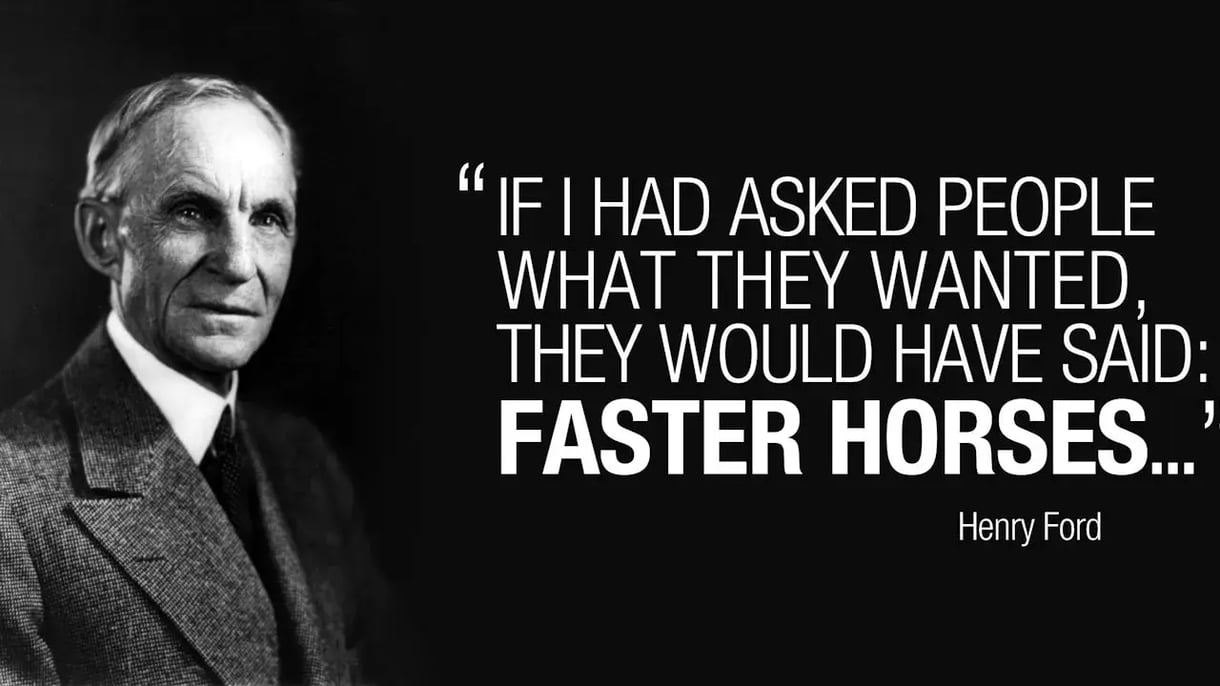
Cost savings are often associated with automating manual tasks. This usually means digitising an existing process, designed by managers who know it well. But, as Henry Ford famously put it: “If I had asked people what they wanted, they would have said faster horses.” It is worth taking a step back to consider whether the process is necessary at all, or whether it could be organised in an entirely different way.
Think carefully before automating
Robotic Process Automation (RPA), Large Language Models (LLMs) and artificial intelligence (AI) make it easier to automate existing legacy processes. A common example is using RPA to process PDF invoices arriving in a mailbox and enter them into an ERP system. But would it not be more efficient to send those invoices directly to the ERP system as XML messages?
In the financial sector, Know Your Customer (KYC) departments, sometimes employing more than 3,000 people, struggle with identity verification processes and try to accelerate them using algorithms. Digital identity technologies can establish conclusively who someone is at the first customer interaction, making KYC departments largely redundant.
In field services, technicians use inspection apps to automate data collection. However, real-time monitoring and predictive maintenance could eliminate the need for many of these activities.
Meanwhile, marketing departments at large multi-brand companies use large language models and chatbots to improve customer service. Yet simplifying the product range and making services easier to use could significantly reduce the number of customer service enquiries.
Start with the process, then automate
We automate what we know and forget to keep reviewing the underlying processes. Start with a thorough analysis of those processes, and only then automate.
Do not get me wrong: technology can certainly help improve our world and automate repetitive, mind-numbing work. But first, we need to determine which processes actually need automating. The greatest cost savings come from eliminating certain processes entirely because digital technologies make them unnecessary.
"These are all processes and technologies that can help make IT succesful by simplifying the delivery process"
"Do not work on faster horses: design a new car."
Want to know more? Contact Robbrecht van Amerongen