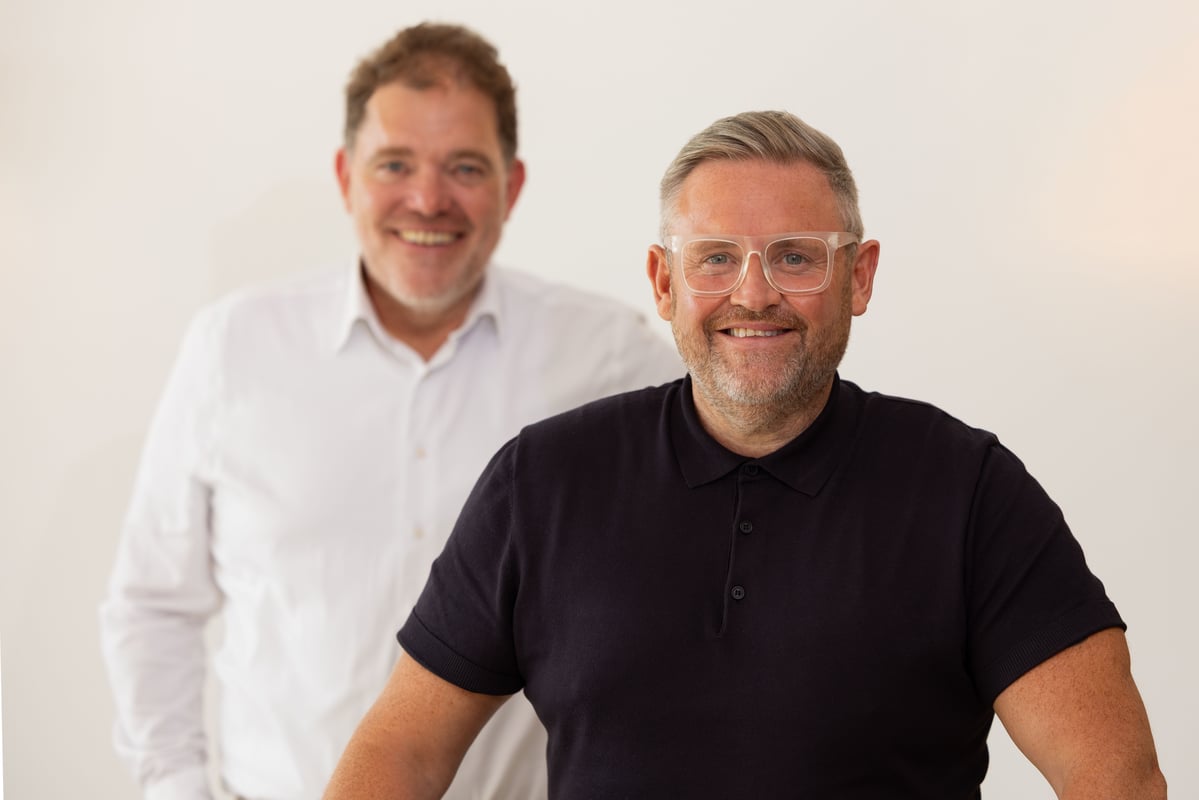
The companies of SHV Holdings are highly diverse and active in various markets: from energy distribution and cash-and-carry wholesalers to heavy lifting, logistics and animal feed. Each company is unique, but they share common challenges: the major technological themes of our time. In this article, SHV Corporate IT Director Richard Ventre and Seger Theuns, Managing Director of Conclusion Benelux, discuss these challenges together.
Richard Ventre, Corporate IT Director of SHV, directs his IT strategy towards a single goal: balance. This means knowing where to collaborate and exploit scale, and where to be autonomous for agility and differentiation. "We don’t want to impose a standard model on our companies, because each has its own profile," says Richard. "But we also want to apply the lessons learned from one company to another. In this way, we create synergy and leverage our scale. This certainly applies to the major challenges of the moment: digital sovereignty, the use of AI, information security and cyber resilience, digital transformation and sustainability."
Seger Theuns, Managing Director Conclusion Benelux, recognises what Richard is saying. "Conclusion also consists of different companies, which operate as an ecosystem rather than independently. We also want each company to retain its own profile, but to work together when it comes to the major themes Richard mentions. Together, you can achieve more."
“We don’t want to impose a standard model on our companies, because each has its own profile”
Richard Ventre
"Take digital sovereignty," says Richard. "For many companies, including SHV, this is not an abstract concept, but a strategic issue that we have to take seriously. Look at the rapid changes in the geopolitical landscape. Around the globe, countries are introducing legislation to regulate access to data, both within the country and abroad.
“Digital sovereignty can no longer be taken for granted. In this changing playing field, it is essential to stay on top of all regulations. As a company, you have to be absolutely sure that you can access your data at all times. So for us, the question is: how dependent are we on certain technology companies and how best to manage these dependencies?”
“The reality is that you can never completely eliminate dependence on big technology firms,” says Richard. "AWS, Microsoft and Google together account for around 90 per cent of global cloud workloads. But you do see alternatives emerging, such as Stackit from the Schwarz Group, that are aimed at providing digital sovereignty. They are developing their own hyperscaler to create a sovereign cloud, and Microsoft also recently announced their own Sovereign Cloud offering in response to customer demand. We are closely monitoring these kinds of developments.”
Seger notes that this is not a black-and-white issue. "It's about weighing things up carefully. Which workloads are critical and where should they run? Where can we accept risks and where absolutely not?" Richard: "Conclusion helps us by acting as a sparring partner, working out scenarios and pointing out possibilities that we might not immediately see ourselves." Seger adds: "As a company, you don't have to make radical choices. It's about hybrid designs, where you determine the best solution for each workload: sometimes public cloud, sometimes alternatives, sometimes private."
In 2025, GenAI is impossible to ignore. Richard: "Everyone is experimenting with it. We also have pilots and proofs of concept. But the question must of course be: where can it actually deliver real business value? The biggest barriers to value are not in the technology, but in other areas: data quality, adoption, talent and rethinking business processes.”
That is why SHV is exploring how to organize for AI. "We have dozens of operating companies, all of which have questions about AI. By pooling our knowledge, we are building a community across SHV that is collaborating to overcome these barriers to value and ensure that we work safely and ethically with AI. We are exploring how to ensure effective governance without stifling agility, and identifying use cases that are broadly applicable across all SHV Groups, for example in finance, procurement or legal. This will allow us to focus on the use cases that will bring most value and prevent each individual company from duplicating effort."
“AI literacy is perhaps even more important than the technology itself”
Richard Ventre
Seger: "GenAI is obviously a hot topic that our customers deal with on a daily basis. That is why we at Conclusion want to be 'AI-first'. This is not optional, it’s a must. We want to be comprehensive and embrace all facets of AI, including adoption. We offer extensive services in the field of AI literacy, raising awareness among customers and their employees about the impact of AI and what it can do. We have a ‘discovery proposition’ that helps customers discover where AI can add value and improve returns. In short, it's not about putting tools in place, but about getting people on board and translating use cases into concrete value.”
Richard agrees on the importance of awareness. “AI literacy is perhaps even more important than the technology itself. If employees don't understand what AI can and, more importantly, what it cannot do, we will miss the opportunities and adoption will fail.”
But the technical side of the story is, of course, just as challenging. Once the foundations are in place, you can really get started, according to Seger. "Without a solid data architecture, there is little point in deploying GenAI, so we are putting those foundations in place first." Richard: "We are working on projects that prepare the data foundation with Microsoft Data Fabric. It may not be an exciting topic, but it is a prerequisite for deriving value from AI in the future.”
At the top of Richard's agenda is cybersecurity. "The threats are only increasing, and AI is accelerating that process. Deepfakes are a good example of this. Your CEO contacts you and asks you to transfer a sum of money urgently. His voice, his face, his attitude: everything is right. But it's not really him. The danger lies not only in system threats, but just as much in deceiving people. That's why we invest heavily in awareness and threat intelligence."
"That sounds very familiar, many of our customers struggle with the same issue," adds Seger. "That's why we provide 24/7 Security Operations Centre services, or SOC, for monitoring, detection and rapid response to incidents." Richard: "Partners must demonstrate that they work securely. That inspires confidence: you know that you are working with a party that does not see security as an afterthought, but as a foundation."
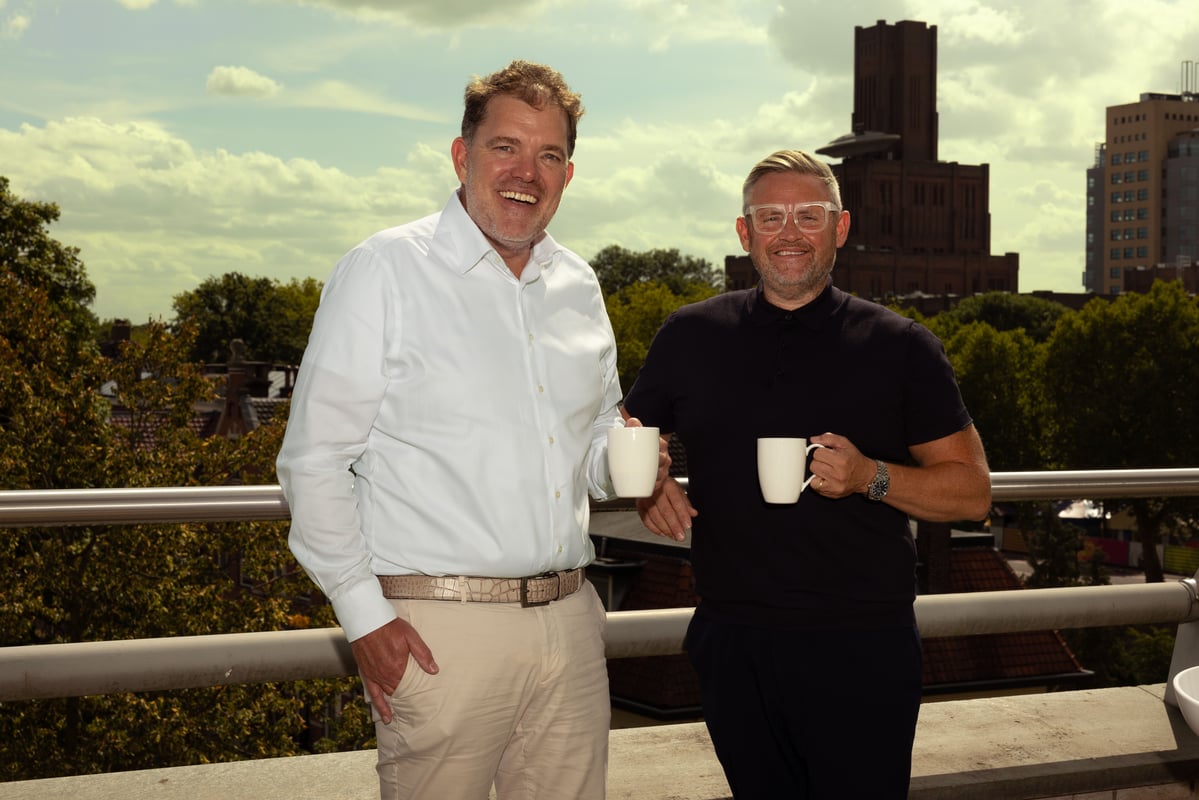
Another important focus for Richard and his team is enabling business transformation. “At SHV, we have had some rather complex ERP projects in the past. Our company Mammoet is transforming to a global way of working, based on harmonized processes underpinned and enabled by SAP RISE. That is no easy task for a company of that size.”
"This is a business led transformation that IT is enabling, and that’s how it should be. It starts with the business strategy and then we consider the business capabilities and underlying business processes before we make technology choices. Mammoet was one of the first companies to go to SAP RISE and they selected Conclusion as the partner for this journey. They have been very strict about taking a fit-to-standard approach. Rather than adapting the system to their needs, they adjusted their processes to align with SAP best practices. It took some adjustment, and required significant business change, but this way it will deliver more value."
Richard continues: “Conclusion played a key role in this. Whilst the program is executed locally by the Mammoet team, there were occasions when I was asked to escalate issues or concerns to the Conclusion senior team. What I really appreciated is that I could always call Seger directly if something went wrong. There were moments of heated discussion, but always with the intention of finding a solution together.”
Seger: “I am really proud of this project. After the discussions about business transformation, Mammoet took the lead itself. They determined the processes and application landscape for their global operations. This led to excellent cooperation between Mammoet and the other partners. Thanks to this solidarity, the delivery process ran smoothly. I thoroughly enjoyed the cooperation and discussions. Of course, discussions became more heated from time to time, but that's part of the process. Thanks to our 'shoulder-to-shoulder' approach and solid relationship, we were able to deliver successfully."
Richard concludes: "Whatever challenge you want to tackle, the foundation remains the same. Striking the right balance between doing things together or doing it alone, and it starts by asking the question ‘is there shared value to be gained’. To establish this, you need to build trusted relationships across the organisation and then you need to have a good ecosystem of partners to think along with you, but who also dare to challenge you. Conclusion is part of that partner ecosystem, not because they have all the answers, but because they ask the right questions.”
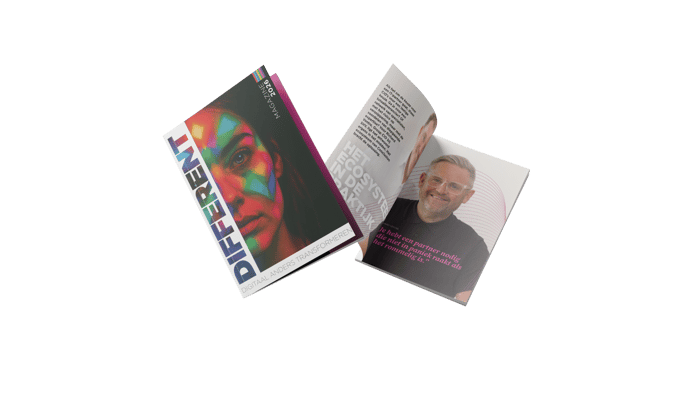
Digital transformation challenges organisations to raise their game. It means embracing AI, ensuring data integrity, defining cloud strategies, driving technological sustainability, and meeting the growing demand for highly personalised services.In DIFFERENT, you’ll find insights into 10 critical themes, inspiring real-world stories, and sharp expert perspectives.
Dare to do things differently. Request your copy of the magazine and take the lead.

Always up-to-date
Newsletter