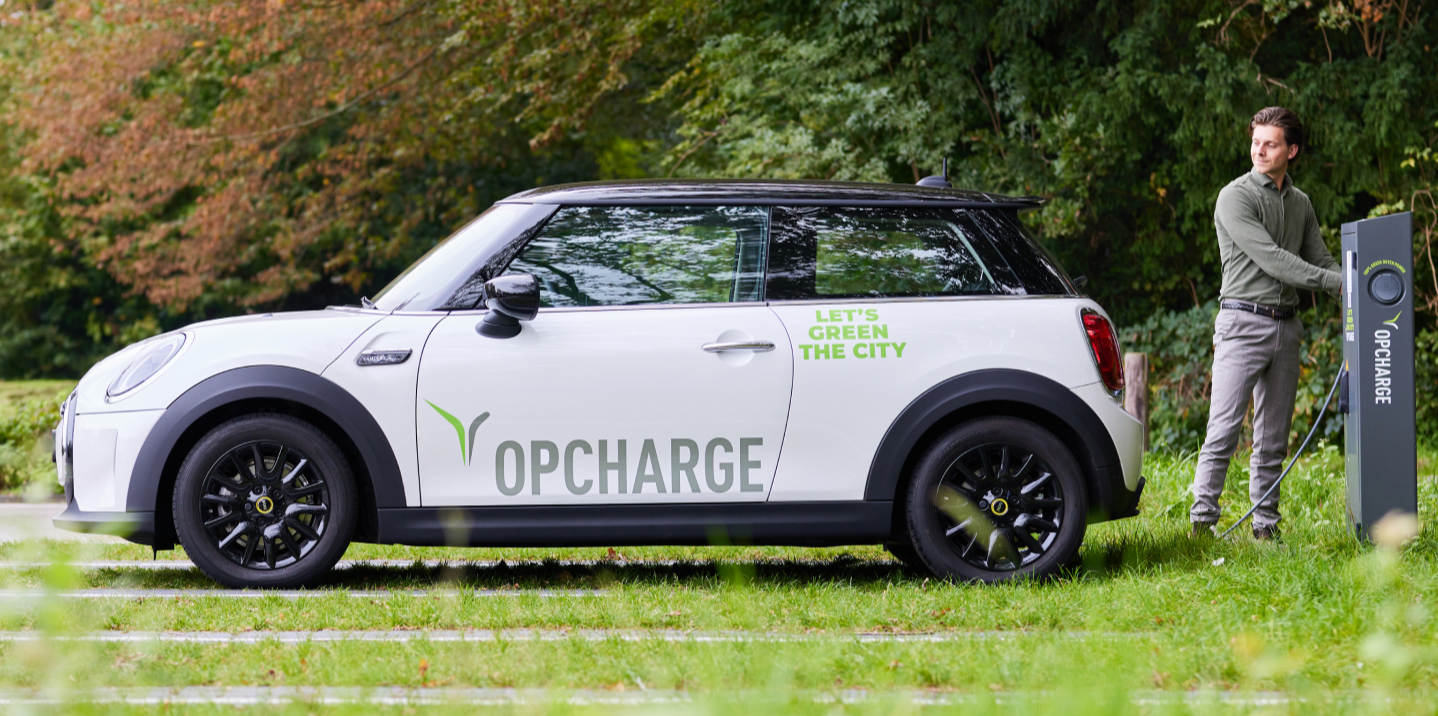

opcharge car.
  • Author

    Conclusion

    |
  • Market

    Public Transport

    |
  • Publish date

    December 1, 2025

    |
  • Share

Opcharge

 Reliable data as the foundation for growth

Opcharge specialises in charging solutions for electric vehicles across Europe. Since its founding in 2018, the company has focused on installing both public and business charging stations. As an ambitious scale-up, Opcharge aims to become the leading provider of green charging solutions in the EU. Its goal: to realise 90,000 charging points by 2030. Service, customer focus, attention to local conditions and tailored solutions for EV drivers are central to this mission.

The challenge:
Gaining control over fragmented data

Opcharge collaborates with various partners for charging infrastructure, energy procurement and transaction processing. This results in a complex data landscape, with fragmented information from multiple sources. In line with its ambition to grow and professionalise, Opcharge sought greater control over its data and related processes. 


The company needed improved insight into the core of its operations: linking the purchase and sale of energy via charging stations. Transaction data was scattered across systems and manually compiled in Excel, leading to excessive manual work and a higher risk of errors. 


The registration of renewable energy units (HBE certificates) also proved challenging. As Opcharge supplies green electricity to the logistics sector, it qualifies for green certification. This is strictly regulated and requires watertight evidence that every kilowatt hour sold was indeed purchased as green energy – and at the same location. These HBE audits demanded significant manual effort. 


The approach:

Building a data-driven foundation


Together with Conclusion, Opcharge took its first step towards a data-driven approach by setting up a data warehouse. Using manually imported data, Hot ITem Conclusion developed an initial dashboard. It soon became clear that the data provided was not always accurate or complete. A supplementary dashboard was therefore created to monitor data quality and detect anomalies. This gave employees visibility into errors and inconsistencies, and the ability to correct them independently. 


To structurally improve the process, the next phase involved automating data processing within the Opcharge data platform, built on Snowflake. In parallel, the team developed a robust data model based on a Business Object Model (BOM). This clearly defined and separated entities such as charging stations, connections, connectors and locations – including their interrelationships. This laid the groundwork for improved data structure, higher data quality and automated integrations.


The retrieval, integration and reporting of data from all relevant source systems was then fully automated. A layered data architecture was implemented, consisting of: 


  1. Raw layer – storing unprocessed data directly from all source systems. 
  2. Integrated layer – combining and structuring data according to the BOM. 
  3. Consumable layer – making data available for use in dashboards, reports and analyses. 


The result:

Insight, control and growth opportunities


Thanks to the integrated data platform, Opcharge now has full control over its entire charging station portfolio. Employees have daily insight into the performance of more than 2,000 charging locations, enabling immediate identification of both underperforming and high-performing sites. This allows for more targeted decisions around sales, maintenance and investment. Financial oversight has also improved: backed by data from the platform, Opcharge successfully refuted unjustified claims from energy suppliers. 


In addition, the complex HBE calculation is now fully automated. By reliably linking purchase and sales data, the audit was completed without any remarks. 


Data quality has demonstrably improved. At the same time, a data-driven way of working has emerged that strengthens collaboration between departments. The platform is now actively used to identify commercial opportunities, such as expanding charging points at high-performing locations. 


Next step:

Steering in real time based on energy prices


What’s next? Building on this data foundation, Opcharge is developing a smart charging strategy that responds in real time to dynamic energy prices. This not only optimises existing operations, but also drives growth in new markets. 

“By putting data at the heart of operations with the help of Hot Item Conclusion, sales, finance and operations now speak the same language. The result? Decisions that are not only faster and better, but that truly contribute to sustainable growth.”

Otto van Bergen

Male colleague with tablet in his hand.

Strategy drives insight

Data & AI

Data & AI offer unprecedented opportunities to work smarter, faster and more sustainably. But real value only emerges when strategy, technology and people work in harmony. Discover how reliable data, intelligent AI and strong governance can truly make a difference. From better decision-making to greater innovation power – it all starts with a thoughtful approach.