OBSERVABILITY

From insight to impact
IT systems are becoming smarter, but also more complex. Microservices, cloud platforms, APIs, containers and an increasing number of teams and suppliers together form a single value chain, where everything is connected. At the same time, each part tends to have visibility only into its own domain. And when something goes wrong? You do not just want to know that an issue exists, but why it exists, across the entire chain, including the AI applications that are increasingly becoming part of it.
Observability helps you answer that question. It provides visibility into what is happening across your IT landscape, how components interact and what impact those interactions have. This enables you to identify root causes more quickly, improve with greater precision and focus on what truly matters.

From measuring to understanding:
the three Cs of observability

Collect
It starts with gathering data. Not only metrics, but also logs, traces and events from every layer of your IT landscape. From infrastructure to applications, and from networks to user experience.
Correlate
Next comes correlation. By connecting data points, systems and processes, you create context. You can see not only the symptoms, but also the underlying causes and dependencies.
Control
Insight creates control. You can resolve incidents more quickly, intervene proactively and even anticipate where risks are likely to emerge. This helps you maintain control over performance, availability and customer experience.

From insight to action: the closed loop 

Insight alone is not enough. You also need to understand what a signal means, who is responsible and what action should be taken. This is where service integration and automation come into play. Service integration connects insights to responsibilities and agreements, while automation ensures recurring actions are carried out faster and more consistently.


The result is a closed loop consisting of four stages: observe, interpret, act and learn. Observability detects signals, service integration determines who should respond, and automation supports or automates the action. The outcome then becomes input for the next cycle.

Magenta Eye with Magnifying Glass on Black Background-2

Observability  
and AI

AI makes visibility and control even more important. Generative AI can produce different outcomes from similar inputs. As AI increasingly supports decisions and carries out actions, organisations need to understand what the system is doing, what results it produces and when human intervention is required.


In this context, observability goes beyond monitoring availability and performance. Tracking behaviour and identifying anomalies become equally important. As a result, observability is becoming a key capability for the responsible use of AI.

Our approach

Observability is not a one-size-fits-all solution. That is why our approach always starts with understanding the real need. What do teams genuinely want to know? Where are the pain points? Which insights will make the greatest difference? Together with the client, we map the logic behind systems and processes. Based on that understanding, we make the right choices and develop a clear roadmap. This helps prevent delays caused by execution bottlenecks.


We deliberately look at the service as a whole. Which systems, teams and suppliers enable the service? What dependencies exist? Who is responsible for what? And what level of insight is needed to manage the entire chain effectively?


We then design practical dashboards and alerts that fit day-to-day operations. Clients perform their own analyses, ensuring insights remain closely aligned with their context and objectives. We provide support where needed and actively guide teams throughout the process, from implementation to training, enabling them to take ownership with confidence.


Where it adds value, we also explore the connection between observability, service integration and automation. In this way, observability becomes more than a way to see and understand what is happening. It becomes a way to reach the right action more quickly.

observability3

Building insight together with our experts

Observability goes beyond traditional monitoring. It represents a different way of working. It requires collaboration between teams, knowledge sharing and a smart operational setup.


Conclusion supports organisations at every stage, from strategy and implementation to adoption and training. We combine technical expertise with deep knowledge of governance and automation, helping organisations gain greater visibility into their digital services and act decisively on the insights they uncover.

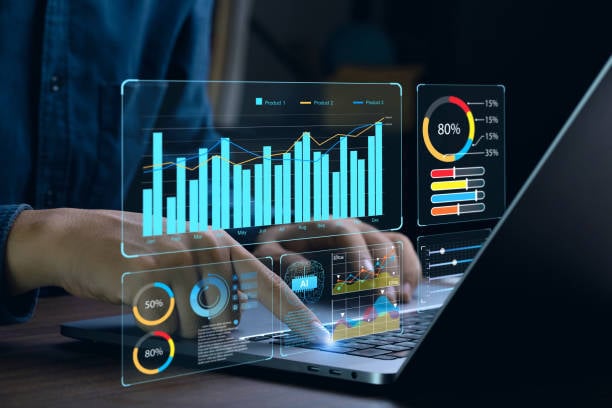
Hands typing on a laptop with a dashboard graphic overlay

Blog
Observability: Insight as the key to control

In a conversation with observability experts Marina Pollehn and Jitse Klomp, it becomes clear why observability forms the foundation of modern IT service delivery.

Would you like to know how

observability can support your organisation?

Angelo Kaiser, Director Conclusion Xforce

Angelo Kaijser

Director Xforce