
Keep building

on projects and the construction sector
The demand for construction is growing faster than the number of skilled professionals available. Project selection increasingly hinges on sustainability, capacity and project margins. The ambition is to create a predictable project cycle. Data and technology help identify deviations early and provide continuous insight into the relationship between planning, budget and risk profile
Twee mannen op een bouwplaats


Sustainability sets the threshold

Sustainability carries significant weight in project selection. The scope available within defined parameters for material use, CO₂ reduction and life-cycle costs helps determine whether a project is financially viable and competitive.

Predictable costs, planning and margins
The aim is to have up-to-date project data that connects estimating, planning and delivery. This brings deviations and their impact on failure costs, project margins and risks into view earlier. It leaves time to make adjustments and deploy capacity where it is needed most.
Productivity at every stage of construction
Standardisation, automation and industrialisation increase productivity, from engineering and prefabrication through to the construction site. This improves scalability while retaining room for project-specific customisation.

Specialists who understand construction

The construction experts within the Conclusion ecosystem work closely with your organisation on complex challenges involving project control, safety, capacity management and data exchange across the value chain.


We bring hands-on experience from the construction sector and understand how tendering, estimating, delivery and completion are interconnected. Colleagues from different technology domains join the team directly where needed. This is how we combine construction expertise with technology expertise, from strategy through to delivery.

Today's and tomorrow's challenges

Selecting profitable projects

Project selection is one of the most critical moments in the entire construction process. Carefully weighing the order book, available capacity, cost estimates and risk profile determines which tenders make financial and operational sense.

Predicting planning and delivery

Real-time project data connects estimating, planning and delivery. This highlights deviations in costs, capacity and progress early enough to safeguard project margins and completion dates.

Increasing productivity

Scarce skilled professionals need to be deployed where their expertise adds the most value. Standardisation, prefabrication, automation and industrialisation reduce repetitive work and increase productivity, from engineering through to the construction site.

Calculating the impact of sustainability

Sustainability already plays a role in project selection. By calculating material use, CO₂ emissions, energy performance and life-cycle costs for each design option, sustainability and affordability become measurable factors in cost estimates, the business case and tender process.

Improving safety systematically

Safety data, risk reports and incident patterns reveal where risks are concentrated. Leadership sets the standard. Training and monitoring turn these insights into safer decisions during work preparation and delivery.

Sharing data across the construction value chain

Clients, designers, suppliers and subcontractors work with different systems and data sources. A common data environment and clear agreements on data keep BIM models, drawings, schedules and changes up to date and usable across the entire value chain.

Value chain coordination and innovation

Construction projects bring together a wide range of parties, each with their own interests and information systems. Clear agreements on data exchange and responsibilities connect technological innovation with day-to-day practice and strengthen project control.

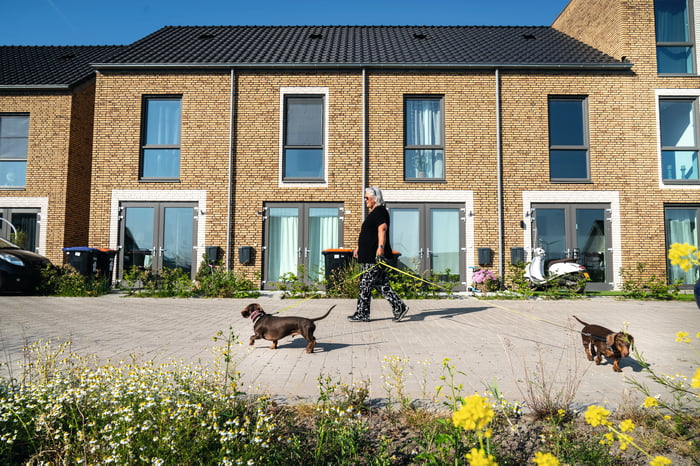
Een vrouw die twee honden uitlaat

Heijmans: Building on innovation

If there’s one sector that demands innovation and smart thinking more than ever, it’s construction. With a need for 100,000 new homes annually and a pressing call to reduce climate impact, Heijmans is stepping up. Hendrik-Jan Smaal, CIO at Heijmans, explains how innovation and collaboration are essential to their mission.

Solutions for your challenges

Aerial View Over Magenta Cyberpunk Construction Site

AI-generated

Making projects predictable and profitable

A project deserves a place in the order book when it can be delivered within the sustainability parameters and offers a sufficient project margin. Forecasting and scenario analysis show at an early stage what design choices mean for feasibility and returns.


Once a contract has been awarded, real-time project data connects the estimate with delivery. Deviations become visible sooner, leaving time to make adjustments.

Futuristic construction site

AI-generated

Embedding a strong safety culture in construction

A strong safety culture develops when employees recognise risks and continue to act responsibly under pressure. Targeted training makes safety procedures recognisable and applicable in everyday work.


In simulations, project teams practise realistic situations. Specific interventions keep safe working practices front of mind during work preparation and delivery.

Man Overlooking Futuristic Magenta Construction Site

AI-generated

Using construction data throughout the entire life cycle

During design and delivery, project information flows between numerous parties and systems. A common data environment keeps BIM models and changes up to date for the entire value chain.


During the asset management phase, sensor data, digital twins and AI models provide up-to-date insight into asset condition. This allows maintenance to be better aligned with the actual technical condition and life-cycle costs.

Want to know more about our solutions in this sector?

Eugene Reijgersberg

Client Director